


For millennia, wisdom traditions have beckoned us to pause, reflect, and delve into the deeper questions that govern our lives. In today’s fast-paced world, where the external often takes precedence over the internal, the concept of leaning into your soul’s calling offers a powerful path to rediscovering what truly makes meaning in life.
This short article is inspired by a fireside talk I delivered on New Year’s Eve 2020, where I had the privilege of exploring these profound themes with a live audience whom I invited to consider one of C.G. Jung’s most essential inquiries: “The decisive question for man is: is he related to something infinite or not?” This question lies at the very heart of our relationship with the soul—the essence of who we are beyond the roles and identities imposed upon us by society.
The Journey of the Soul
When we speak of the soul’s calling, it’s easy to confine it to the realms of career, life purpose, or a specific set of talents. While these elements are certainly aspects of the soul’s calling, they only scratch the surface. The journey of the soul is far more expansive, encompassing the reclamation of the lost pieces of ourselves and the pursuit of wholeness.
Drawing from various traditions, including Greek mythology and shamanism, we find that the concept of soul loss and separation from the infinite is central to the human experience. Plato, a Greek philosopher who lived around 430 BC, pointed to a myth that suggested humans were originally beings “with four arms and four legs who were split in two by the gods.” He wrote, “We’re thereafter always doomed to be searching for our beloved, the missing aspect of ourselves.”
This myth reflects our inherent longing for something more—a quest to reunite with our lost selves. Similarly, in shamanic traditions, the idea of soul loss speaks to the parts of ourselves that flee in the face of trauma, leaving us fragmented and disconnected. Our work, therefore, is to call back these lost pieces and reintegrate them into our being. This is not a process of becoming something new, but of uncovering what has always been within us. Our authentic soul self is encoded in our very being, waiting to be acknowledged and embraced.
Symbolism and the Soul’s Call
The symbolism of this journey is poignantly illustrated by the phenomenon known as Colony Collapse Disorder, first identified in 2006, where billions of honeybees began disappearing from their hives, leaving only the queen and a few attendants behind. This serves as a potent metaphor for our own spiritual journey.

Bees, in mythology, are seen as messengers between realms, negotiating the space between the divine and the ordinary. Their loss symbolizes our own disconnection from the sacred, our inability to navigate back to the hive—our true home. The hive, much like the womb, represents the sacred feminine, the soul—a space of nurturing and life force that we have largely abandoned in our culture.
To reconnect with the Infinite, we must consciously and intentionally return to the “hive,” bringing back the experiences and learnings from our daily lives, offering them to a greater force, and honoring and integrating them in the context of our profoundly human journey. This requires us to be present, to ask ourselves what we have done with our days, and how we can offer our understanding and wisdom gained from our experiences back to the community. Without this conscious return, we risk becoming lost—like the bees caught out alone at night, unable to find their way back.
Descent and Transformation
The journey to the soul is not without its challenges. The myth of Inanna, the Sumerian goddess who descended through seven gates into the Underworld to meet her dark sister Erishkegal, serves as a powerful example of this process. Inanna’s journey required her to shed her egoic identity by relinquishing everything she held dear, symbolizing the need to shed the ego and its attachments.
As we navigate our own descents, often recognized as a “dark night of the soul”—whether through personal crises, challenges, or deep suffering—we are called to surrender aspects of ourselves that no longer serve us. This is the path of individuation, the process of becoming whole by integrating all parts of ourselves, even those we might prefer to avoid. C. G. Jung referred to this as facing the shadow, which is described as that which is unconscious within.
Suffering, though painful, can be seen as an initiatory experience—an opportunity to make meaning of our lives. As we face the gatekeepers of our psyche, we are invited to relinquish the ego’s control and allow the soul to guide us. This surrender is essential for our return from the underworld, a return that brings with it the medicine we need to heal ourselves, our communities, and our relationship to the sacred.
Listening to the Soul
But how do we hear the soul’s call in a world filled with noise and distraction? The first step is to create space in our lives—to slow down and allow our souls to catch up. This might involve spending time in nature, journaling, working with dreams, or engaging in creative practices like art or ritual.

Our bodies, too, are key to this process. In a culture that prioritizes the mind, we often forget that the body is a repository of wisdom, a gateway to intuition and soul. By paying attention to our physical experiences—through practices like yoga, breathwork, or simply being present in our bodies—we can begin to attune to the soul’s whisperings.
As we do this work, we may notice synchronicities—what I call “bread crumbs from the soul,” signs that we are on the right path. By entering into a dialogue with these experiences, we can deepen our connection to the soul and to the larger fabric of being.
The Invitation
Ultimately, the soul’s calling is an invitation to live consciously—to recognize that every moment, every encounter, holds the potential for growth and transformation. As Frederick Buechner, the American poet and theologian, said, “Listen to your life. See it for the fathomless mystery it is… because in the last analysis, all moments are key moments, and life itself is grace.”
If you feel called to explore your own soul’s journey, I invite you to reach out. Whether you’re seeking profound personal transformation through one-on-one work, or by participating in a 1-or-2-year training program for those who wish to help others on this path, there are many ways to deepen your connection to the soul. Together, we can find the meaning that lies within the darkness and emerge with the gifts that our souls long to offer to the world.
Watch the full video presentation of the talk on which this article is based (30 mins)
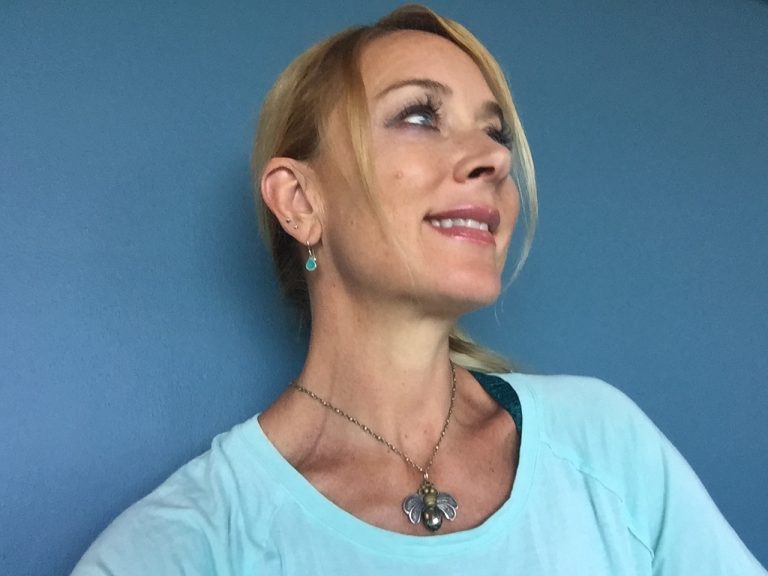
Bonnie Bright, Ph.D. holds M.A. degrees in Psychology from Sonoma State University and Depth Psychology from Pacifica Graduate Institute, where she also completed her doctorate. She is a certified Archetypal Pattern Analyst™ and Transpersonal Soul-Centered Coach, using archetypal and shamanic perspectives to guide clients through spiritual awakening, integrate non-ordinary experiences, and overcome creative blockages. She founded the Institute for Soul-Centered Psychology and Coaching in 2020.
Bonnie is accredited through the International Association of Coaches, Therapists, & Mentors (IACTM) and has extensive training in dream work, Holotropic Breathwork, and the Enneagram. She also completed a 2-year training in Indigenous African Spiritual Technologies with elder Malidoma Somé, has lived with indigenous Shipibo people in Peru, and has worked with shamans and healers across Africa, North, and South America.
She founded Depth Psychology Alliance™, an online organization with over 5,500 members, and served as Executive Editor of Depth Insights™ journal. Bonnie is the editor of Earth, Climate, Dreams: Dialogues with Depth Psychologists in the Age of the Anthropocene (2019) and Depth Psychology and the Digital Age (2016). Her journey into soul-centered work began with a mystical experience in 2006, which continues to inform her daily quest for awakening and helping others find their own path to soul.
About Bonnie Bright, Ph.D.
Bonnie Bright, Ph.D. holds M.A. degrees in Psychology from Sonoma State University and Depth Psychology from Pacifica Graduate Institute, where she also completed her doctorate. She is a certified Archetypal Pattern Analyst™ and Transpersonal Soul-Centered Coach, using Somatic, Symbolic, and Shamanic perspectives to guide clients through spiritual awakening, integrate mystical experiences, and overcome creative blockages. She founded the Institute for Soul-Centered Psychology and Coaching™ in 2020. Bonnie is accredited through the International Association of Coaches, Therapists, & Mentors (IACTM) and has extensive training in dream work, Holotropic Breathwork, and the Enneagram. She also completed a 2-year training in Indigenous African Spiritual Technologies with elder Malidoma Somé, has lived with indigenous Shipibo people in Peru as part of a shamanic initiation to learn medicine and healing modalities , and has worked with shamans and healers in the Africa, and North and South America. In 2010, she founded Depth Psychology Alliance™, an online organization with over 5,500 members, and served as Executive Editor of Depth Insights™ journal for six years. Bonnie is the editor of "Earth, Climate, Dreams: Dialogues with Depth Psychologists in the Age of the Anthropocene" (2019) and "Depth Psychology and the Digital Age" (2016). Her journey into soul-centered work began with a mystical experience in 2006, which continues to inform her daily quest for awakening and helping others find their own path to soul.