Nurturing the Planet in a Time of Crisis: A Soul-Centered Approach to Climate Change

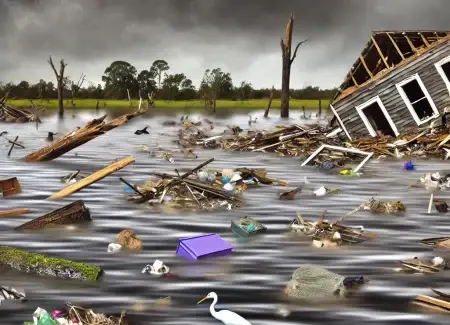
hurricanes are increasing due to climate change. We need a soul-centerd approach.

If you follow the headline news at all, It’s virtually impossible not to know that over the past couple of weeks, hurricanes Helene and Milton have once again brought the global climate crisis into sharp focus. These devastating storms, which have ravaged homes, taken lives, and caused widespread destruction, are the latest in a string of extreme weather events that scientists attribute to our warming planet. As we witness the increasing frequency of such disasters, it’s natural to feel profound despair. In fact, just today, The Living Planet Report broke the alarming news that a staggering 73% of wildlife has […]

Continue reading »

Earth, Climate, Dreams—The Book!

Announcing the long-awaited new book, Earth, Climate, Dreams: Dialogues with Depth Psychologists in the Age of the Anthropocene, based on the global symposium of the same name: Over time, humans in western cultures have undergone a profound restructuring of the psyche, resulting in a traumatic sense of separation from nature and the larger forces that sustain us. In modern day, this egoic isolation contributes to a growing set of challenges on ecological, psychological, and social fronts. Industrial development, technological advancement, the rise of consumerism, and increasing populations—combined with a tendency to prioritize science and rational thought over tending nature and […]

Continue reading »

Frankenstein’s Monster, the Plight of our Planet, and Seeds of Hope—Interview: Robert Romanyshyn

In this hour-long interview, Robert Romanyshyn and Bonnie Bright discuss Frankenstein, the Monster, and the plight of our planet. Focused on Romanyshyn’s new book, Victor Frankenstein, the Monster, and the Shadows of Technology: The Frankenstein Prophecies (May 2019), the pair engage in depth psychological perspectives on culture, crisis, poetry, imagination, embodiment, community, and dreams, among other important topics. >View the full VIDEO dialogue (1 hour)>View a 5-minute excerpt>Access the full AUDIO dialogue See below for a written transcript

Continue reading »

Cosmology, Ritual, and Ecology: A Message from the Kogi Indians about Earth

  Perhaps you’ve heard of a mysterious tribe of Native Indians who live high in the mountains of Colombia, speaking only their own original language, and having little contact with the outside world. These people, the Kogi Indians, have long referred to themselves as the “Elder Brothers,” as they carry the responsibility of being caretakers of the world, helping to maintain a balance of harmony and creativity in the world. In recent years, the Kogi have begun speaking out. They are deeply concerned that non-indigenous consumer cultures living in the modern world, whom they call the “Younger Brothers,” are harming […]

Continue reading »

Ecopsychology: On Educating Ourselves as Ecopsychological Beings in a Psychological World—An Interview with Dr. Lori Pye

Ecopsychology: On Educating Ourselves as Ecopsychological Beings in a Psychological World—An Interview with Dr. Lori Pye As an activist working with NGOs to stop shark finning in Central America years ago, Dr. Lori Pye was once a target of a malicious act intended to intimidate her. The experience plunged her into a sort of psychological crisis. Finding herself face to face with a stark and undeniable image of ecological devastation, she had an epiphany: our own psychological destruction is being expressed in destruction of the ecological world. The experience profoundly renewed Dr. Pye’s focus on ecopsychology. At the same time, […]

Continue reading »

Limitless Growth, the Destructive Myth of our Times: Part One of a Report on a Talk Given by Dr. Vandana Shiva

The idea of limitless growth is the most destructive myth of our times, began Dr. Vandana Shiva, in her inspiring plenary talk at “Climates of Change and a Therapy of Ideas,” Pacifica’s recent 40thanniversary conference held on the Ladera campus in Santa Barbara, CA. Vandana Shiva, who trained as a physicist at the University of Western Ontario, Canada, is Founder and Director of the Research Foundation for Science, Technology, and Ecology and for Navdanya, the movement for seed saving and ecological agriculture. She is also the author of numerous books including Staying Alive, Ecofeminism, Seed Sovereignty and Food Security: Women in the Vanguard (Ed.), Soil […]

Continue reading »

Ecotherapist Linda Buzzell, Panel Presentation for “Earth, Climate, Dreams”—A Summary

In a short presentation as a panelist for “Earth, Climate, Dreams,” an online event hosted by Depth Psychology Alliance™ that took place in April 2016, Linda Buzzell, MA, MFT, shared some insights into the power of “daytime dreams” and working to develop eco-resilience in the face of challenging times. I found Linda’s insights into eco-resilience quite powerful, prompting me to summarize them here in order to share them with you. Linda begins by mentioning the work of Dr. Steven Aizenstat and psychotherapist, Lauren Schneider, both active in the International Association for the Study of Dreams (IASD), and how they perceive […]

Continue reading »

Dreaming the Earth: Earthing the Dream—Depth Psychology and Appreciative Nature Practices with Dr. Pat Katsky

Dr. Pat Katsky is a Jungian Analyst and core faculty at Pacifica Graduate Institute, and she has been a therapist for thirty years. When Pat sat down with me in a recent interview, our conversation focused on the idea that some of the most psychologically healing experiences come from the natural world, a theme derived from an upcoming certificate program, “Dreaming the Earth: Earthing the Dream” starting April 15, 2016. Pat mused on how in the last million or so years of history, humans have always needed nature and did not feel separate from it. But with the industrial revolution […]

Continue reading »

Confronting Signs of a Society in Decline: An Interview with Journalist Chris Hedges

As a Pulitzer Prize winning journalist, Chris Hedges carries with him nearly two decades of experience reporting from war-torn countries like Yugoslavia, El Salvador, and also Gaza and South Sudan. In this capacity, he has witnessed the decline and disintegration of multiple societies, a perspective which has surely influenced his capacity regard the decline and potential destruction of our own modern culture that seems severely out of order. He has been described, more than once, as being “dark,” which, from a depth psychological perspective, I’m quick to assure him, is actually a compliment. Depth psychology insists we look under the […]

Continue reading »

Jung and Synchronicity: The Union of Nature and Psyche

C.G. Jung, one of the founding fathers of depth psychology, was a strong proponent of balancing rational thought with non-cerebral intelligence, insisting that consciousness inherently resides in the body and in the natural world around us.  In fact, he was quite taken by Austrian Nobel prize-winning ethologist Karl von Frisch’s notion of how bees communicated navigational information to their sister bees so that they could forage the best pollen around the hive. Frisch’s research suggested the “waggle dance” performed by bees was both intelligent and purposeful, demonstrating an organizational impulse that stemmed from the “bottom up”—that is, situated on an […]

Continue reading »

Outside vs. Inside: A Depth Psychological Perspective on the Planetary Crisis and the Psyche/Nature Split

If the “outside,” as we in modern western cultures generally consider the physical world, is manifesting rather worrisome phenomena in the form of conflict, destruction of nature and home places, and racial and income inequality, we can draw a connection from what is occurring in the physical world to what must be occurring on an inner level, and therefore witness symptoms in the psychological realm as well. The physical symptoms that are manifesting lie within a larger set of underlying issues, which, in turn, are psychological symptoms of an even larger and more fundamental issue: the sense of separation and […]

Continue reading »

Archetypal Aspects of Home

“Home” is a word weighted with affect and associated with rootedness, attachment, belonging, shelter, refuge, comfort, and identity. When our relationship to “home” is considered in the context of depth psychology, the study of the unconscious pioneered by Sigmund Freud and C. G. Jung among others, it stands to reason that our individual notions of “home” may impact us rather profoundly. A severed connection with “home,” particularly with the earth that supports and nurtures us, produces physical, emotional, and psychological implications. That is to say, the lack of a connection with a “home” that offers us a sense of psychological […]

Continue reading »

How Many Climate Scientists Does It Take?–Media, Perception, and Soul Loss

American psychiatrist Robert J. Lifton identifies our very human tendency to ignore difficult realities and overwrite them with thoughts and beliefs that are more palatable as “psychic numbing.” This allows our ego to distract itself enough that it doesn’t have to engage with inner and outer voices and images and movements that go beyond the mainstream consciousness (in Shulman-Lorenz & Watkins, Toward Psychologies of Liberation). When we witness instances of ecocide (ecological suicide) in the world around us, take note of how wasteful and damaging our consumer-oriented culture has become, or are faced with dire news about how climate change […]

Continue reading »

EcoApathy and Ecospychopathy: Opposite ends of a Dangerous Spectrum

Where does YOUR garbage go when you throw it “away”? Many societies have collapsed en masse over the course of human history due to over-consumption and extreme detrimental impact on the environment and ecosystems that supported them. However, the combination of our persistent unconscious and unchecked rates of consumption stemming from a rapidly growing population, our seeming lack of capacity to feel and respond to the need for balance in relationship to the planet, and our rampant exploitation of nature is alarming. It appears that never before have we had such a lethal combination in concert with such pervasive emotional, […]

Continue reading »

Making a Masterpiece of Your Life: Summary of a Teleseminar by Thomas Moore

“To the soul, the most minute details and the most ordinary activities, carried out with mindfulness and art, have an effect far beyond their apparent insignificance.” —Thomas Moore, Care of the Soul: Guide for Cultivating Depth and Sacredness in Everyday Life   Recently I had the chance to tune into a free teleseminar with author, religious scholar, professor and lecturer Thomas Moore of the book, Care of the Soul, fame. The teleseminar focused on how to make a masterpiece of your life. According to Moore, the word “masterpiece” harkens back to Renaissance, which he’s been studying for thirty years or so. It offers up beauty […]

Continue reading »

Nature Has No “Outside:” Navigating the Ecological Self

Nature Has No “Outside:” Navigating the Ecological Self “Spirit is the inside of things and matter is their visible outer aspect” (C.G. Jung, in Sabini, 2005, p. 2). “I can only gaze with wonder and awe at the depths of and heights of our psychic nature. Its non-spatial universe conceals an untold abundance of images which have accumulated over millions of years of living development and become fixed in the organism….Beside this picture I would like to place the spectacle of the starry heavens at night, for the only equivalent of the universe within is the universe without; and just […]

Continue reading »

Memory, Place and Story: How Connection to Land Connects us to Self

Some would argue our contemporary consumer-based, productivity-oriented culture contributes to a collective loss of memory—done of being connected to something larger than our everyday selves. As a society, we have become dislocated in time and disconnected from place, leaving us rootless, transient, and opting for sensationalism instead of spirituality; superficiality instead of soul. So much of this malady is due to our disconnect from nature, our bodies, and earth itself. We are no longer grounded in something real that gives us context to understand how our lives play out in a fabric of being, a pattern in living nature with […]

Continue reading »

Ecopsychopathy and Sustainability: The End of Life as We Know It

What is Ecopsychopathy and What are the Implications to our Culture?                         In a recent blogpost, I wrote some introductory thoughts about what I’m calling “Culture Collapse Disorder,” an eco-psycho-pathological disorder in which human-made stressors stemming from culture and development (and their correlating underlying connected psychological issues) are causing a drastic systemic imbalance, manifest by a critical rise in adverse conditions for earth and its inhabitants. In short, the way of life most of us are living in modern consumer culture is simply not sustainable and the symptoms and resulting suffering […]

Continue reading »

Culture Collapse Disorder: Can Depth Psychology Help Us Cope?

Earth’s inhabitants are in peril largely of our own making. We are, consciously or unconsciously, systematically destroying the our homeplaces, habitats, ecosystems, and above all, the only home we collectively know: Earth. Reports are emerging daily about the implications of human impact on our environment, presenting dire warnings about pollution, urban development, greenhouse gas emissions, climate change, natural disasters, and displacement. The tally of global losses grows daily as we perpetrate ecological destruction through our relentless consumption of the earth’s dwindling resources; through rampant use of toxins, chemicals, and pesticides; and through deforestation, erosion, and devastation of natural ecosystems, wetlands, […]

Continue reading »

Ensoulment and Synchronicity: Concepts from “Cosmos and Psyche” by Richard Tarnas

Ensoulment and Synchronicity: Concepts from Cosmos and Psyche by Richard Tarnas In his 2006 book Cosmos and Psyche: Intimations of a New World View, Rick Tarnas suggests that the western mind has catapulted us away from a fundamental cosmos where everything was ensouled, alive, and animated by meaning and archetype. Our modern mindset is, instead, to attempt to control and manipulate our environment, making us the active subject in any interaction, and the things we see around us the passive object. Tarnas suggests “disenchantment” refers to the way the world is objectified, thereby denying subjectivity. “Objectification,” he contends, “denies to the world a subject’s […]

Continue reading »
1 2